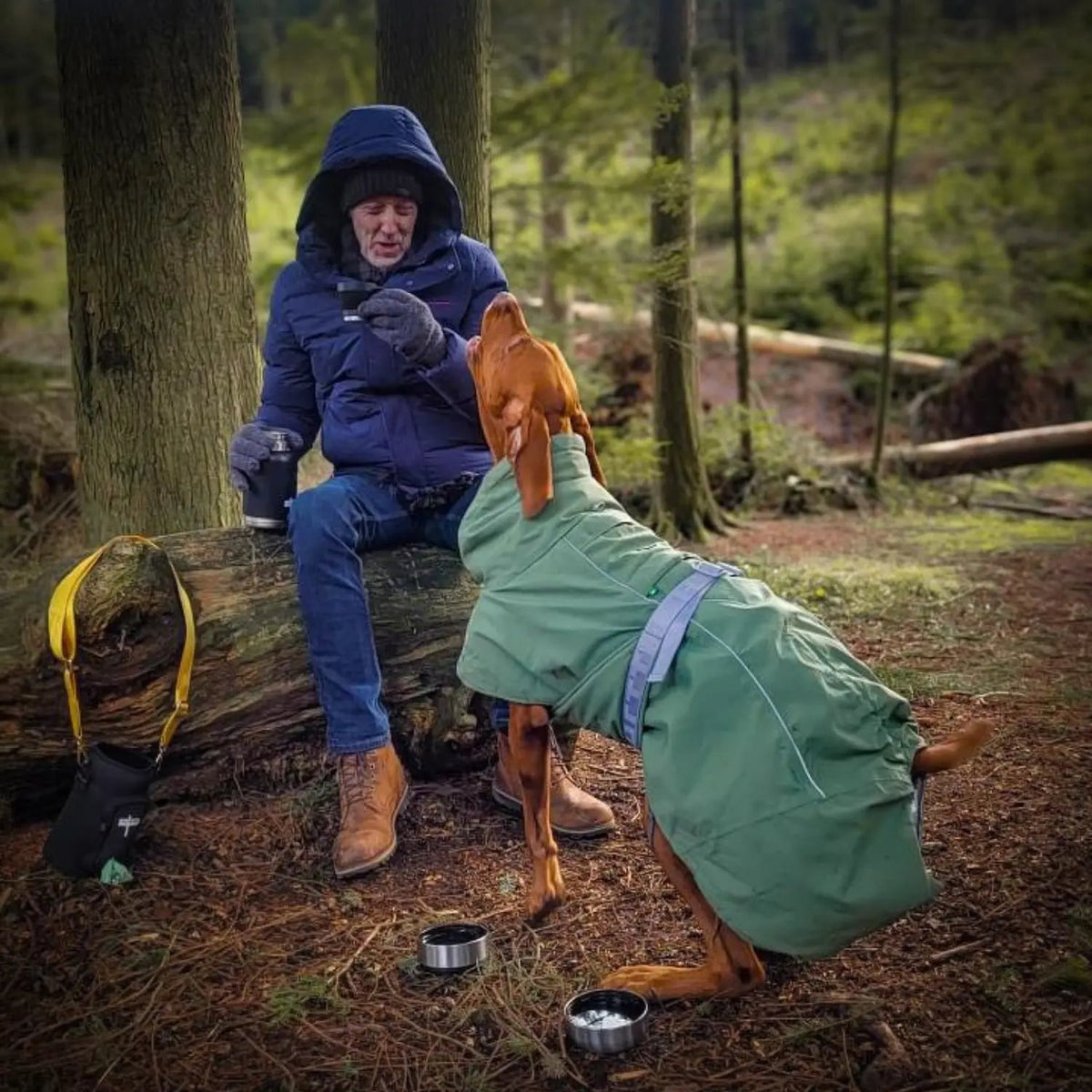
Short days, frosty mornings and gritted pavements change the dog walk. Your dog still needs their exercise, but winter brings a few hazards that summer walks don't: grit and antifreeze, frozen ponds, and walks that start or end in the dark. Here's how to keep winter walks safe, warm and enjoyable for both of you.
1. Make sure you can both be seen
In a UK winter, plenty of walks happen before sunrise or after sunset. PDSA vets recommend LED collars, hi-vis leads and coats, plus a torch, so you can see where you're going and drivers can see you. A flashing or reflective collar or harness is an easy upgrade, and bright or reflective clothing for you helps too.
- Clip a light to your dog's collar or harness so you can spot them off-lead.
- Stick to routes you know when it's dark, and keep your dog on a lead near roads.
- Carry a head torch so your hands are free for the lead and poo bags.
2. Watch out for grit, salt and antifreeze
Road grit and salt can lodge between your dog's paw pads, irritate the skin and upset their stomach if they lick it off. After walks on treated pavements, check your dog's paws and rinse them with plain water, looking for grit, sores or cuts.
Antifreeze is far more serious. The ethylene glycol in many antifreeze and de-icer products is highly toxic to dogs, and even a small amount licked from a spill or from their own paws can cause severe kidney damage. Signs of poisoning can include twitching, vomiting, increased thirst, seizures and collapse.
If you think your dog has swallowed or licked antifreeze, call your vet straight away, even if they seem fine. Early treatment makes a big difference.
Puddles near roads and driveways can contain grit, salt or antifreeze run-off, so don't let your dog drink from them. Bring fresh water from home instead (more on that below).
3. Keep away from frozen ponds and lakes
Frozen water can look solid when the ice is only a thin layer over deep, freezing water. Keep your dog on a lead near frozen ponds, lakes and streams.
If your dog does go through the ice, don't go in after them. It's a natural instinct, but Dogs Trust and Blue Cross both warn that you're more likely to need rescuing yourself. Encourage your dog to swim back towards you, and call 999 if you need emergency help.
4. Does your dog need a coat?
Thick-coated breeds such as Labradors are built for the cold, but short-coated dogs like greyhounds and whippets, puppies and older dogs often feel it more. A well-fitted waterproof coat helps them stay warm and dry on long, wet walks. Towel them off when you get home, especially their paws and tummy.
5. Look after their paws in snow and ice
Snow can build up into hard, painful ice balls between the toes and pads. Keeping the fur between your dog's pads trimmed helps stop this happening. If your dog starts lifting their paws, stops walking or whines, they've probably had enough of the cold, so head for home.
6. Keep offering water, even when it's cold
It's easy to forget that dogs still need to drink on winter walks, especially on long hikes or when they're running through snow. Carry fresh water and offer small drinks at each stop.
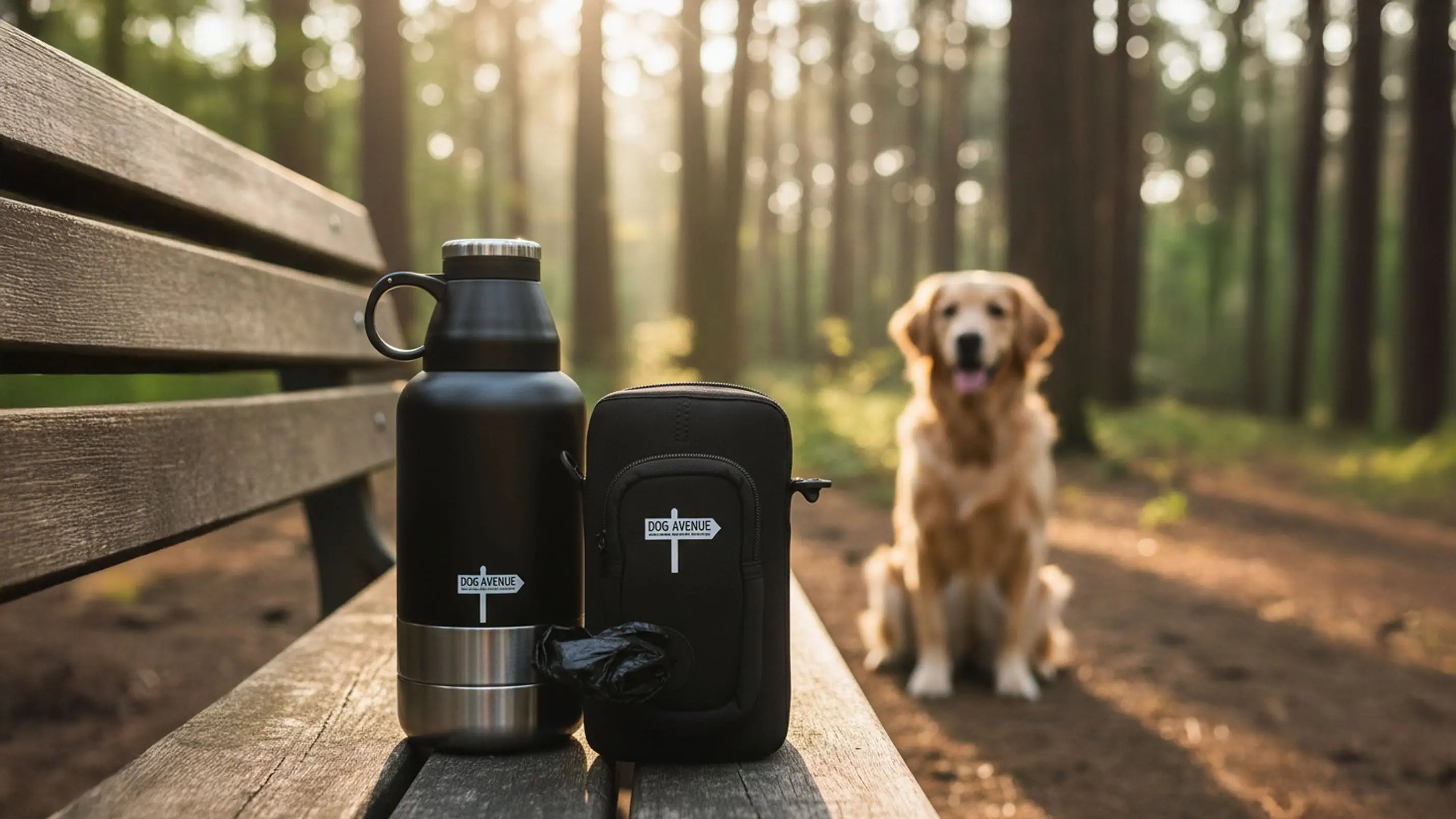
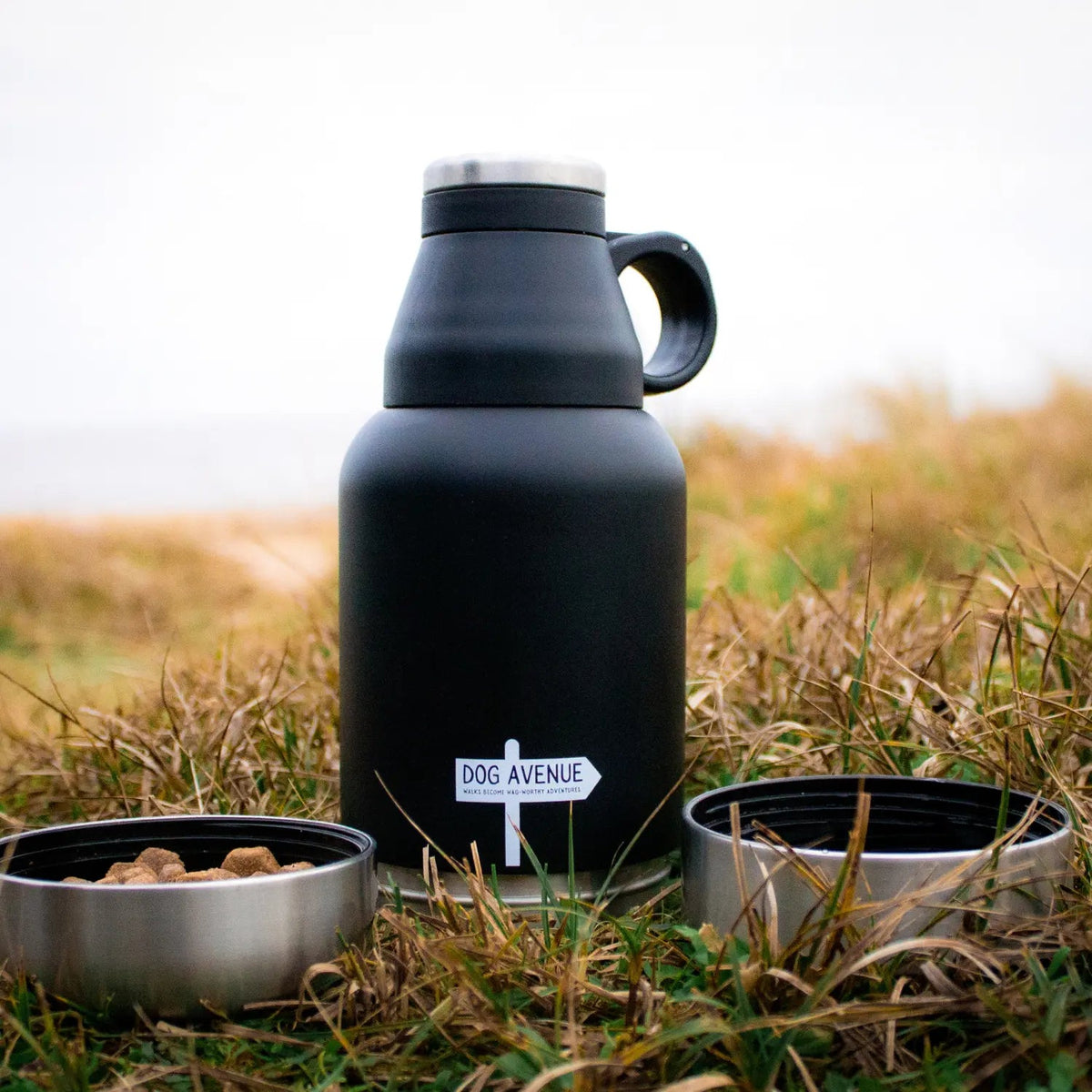
An insulated bottle helps here. The Dog Avenue 3-in-1 Outdoor Dog Water Bottle is double-wall vacuum insulated, which helps stop water turning icy on a cold walk. It also has detachable bowls for water and treats, a waste bag dispenser, and a cup lid, so you can bring a hot drink for yourself too.
7. Adjust their food if walks get shorter
Try to keep your dog active through the winter. On days when walks are shorter than usual, bear in mind that a less active dog may need slightly less food to stay at a healthy weight. If you're unsure, ask your vet. On really wet days, our rainy day indoor games help burn off energy.
Winter dog walk checklist
- LED or reflective collar, harness or lead, and a torch
- A coat for short-coated, young or older dogs
- Fresh water in an insulated bottle, plus a bowl
- Treats for recall (keep your dog close near roads and frozen water)
- Poo bags
- An old towel in the car or by the door
- A bowl of plain water at home to rinse grit and salt off their paws
Winter walks can be some of the best of the year: crisp air, quiet paths and a happy, muddy dog. With a little planning, you can keep them safe too. Heading out on Bonfire Night? Read our tips on keeping your dog calm during fireworks.

Leave a comment
This site is protected by hCaptcha and the hCaptcha Privacy Policy and Terms of Service apply.