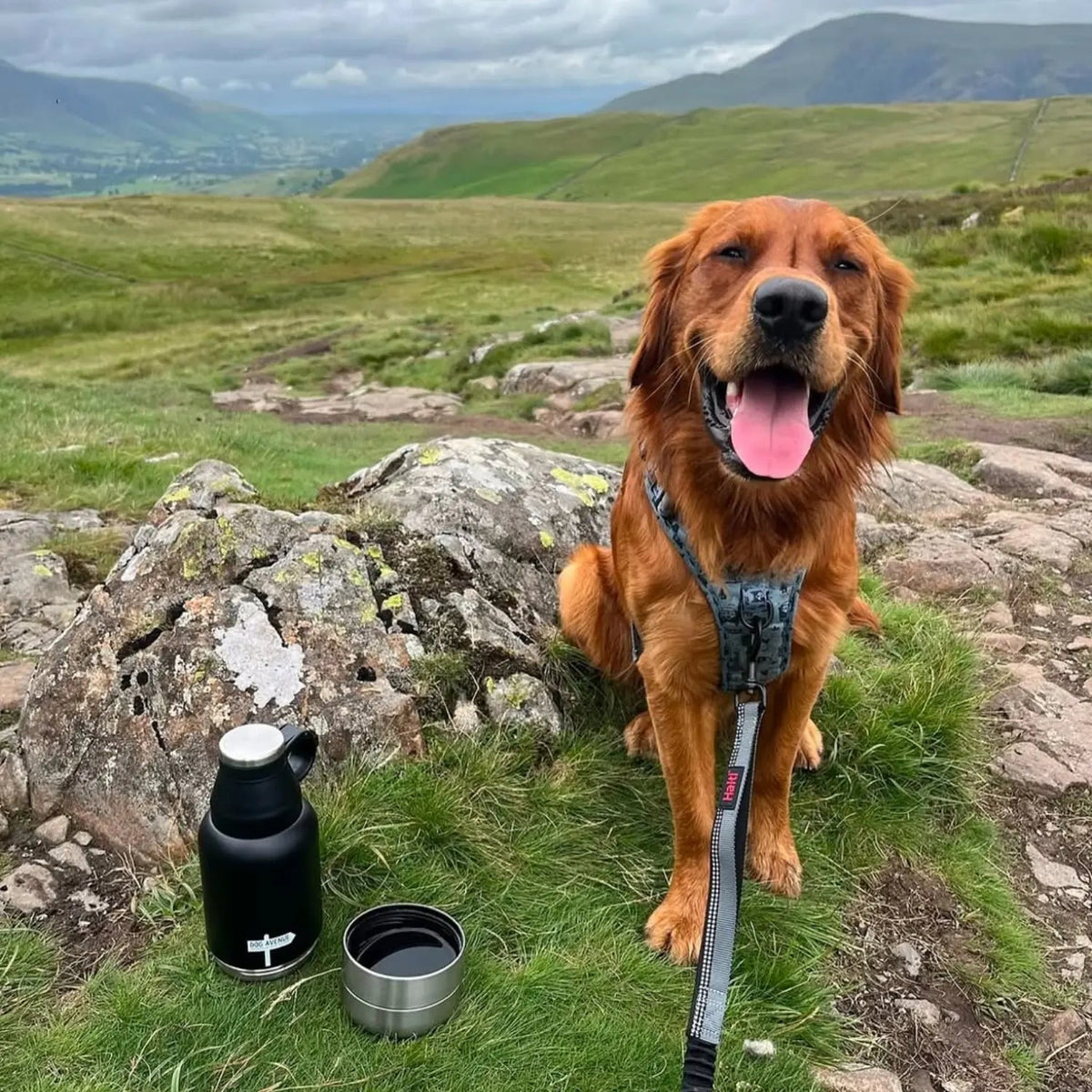
From the Lake District fells to the South Downs, the UK has brilliant walking for dogs. A full day in the hills needs more planning than a trip round the park, though: you'll be further from help, the weather can turn quickly, and there are rules about dogs, livestock and wildlife to know. Here's our practical kit list and the key rules, so you can head out prepared.
Before you go
- Check the route allows dogs. Look for stiles your dog can't manage, busy roads and fields likely to have cattle or sheep.
- Check the weather and plan for it, including shorter daylight in winter.
- Match the walk to your dog. Build up distance gradually, and think about age, fitness and breed. Puppies, older dogs and flat-faced breeds may not be suited to long or steep routes.
- Save your vet's number on your phone, and tell someone your route.
The Countryside Code and your dog
The Countryside Code sets out what's expected of dog owners in England, and some of it is the law:
- Keep your dog on a lead or in sight at all times, and it's good practice to use a lead around livestock wherever you are.
- On open access land, between 1 March and 31 July, your dog must be on a lead no more than 2 metres long, even if there's no livestock. This protects ground-nesting birds.
- On open access land and the coast, you must put your dog on a lead around livestock at any time of year.
- If cattle or horses threaten you, let your dog off the lead. Don't risk getting hurt protecting your dog.
- Always pick up and take away your dog's poo. Never leave bags behind, even if you plan to collect them later.
- A farmer can shoot a dog that is attacking or chasing livestock, so keep control near sheep and cattle.
The dog hiking kit list
Water and a bowl
This is the most important item. There isn't always a clean stream when you need one, and you'll both need to drink. Carry more than you think you'll need, and offer small drinks at each stop, especially after climbs or on warm days.
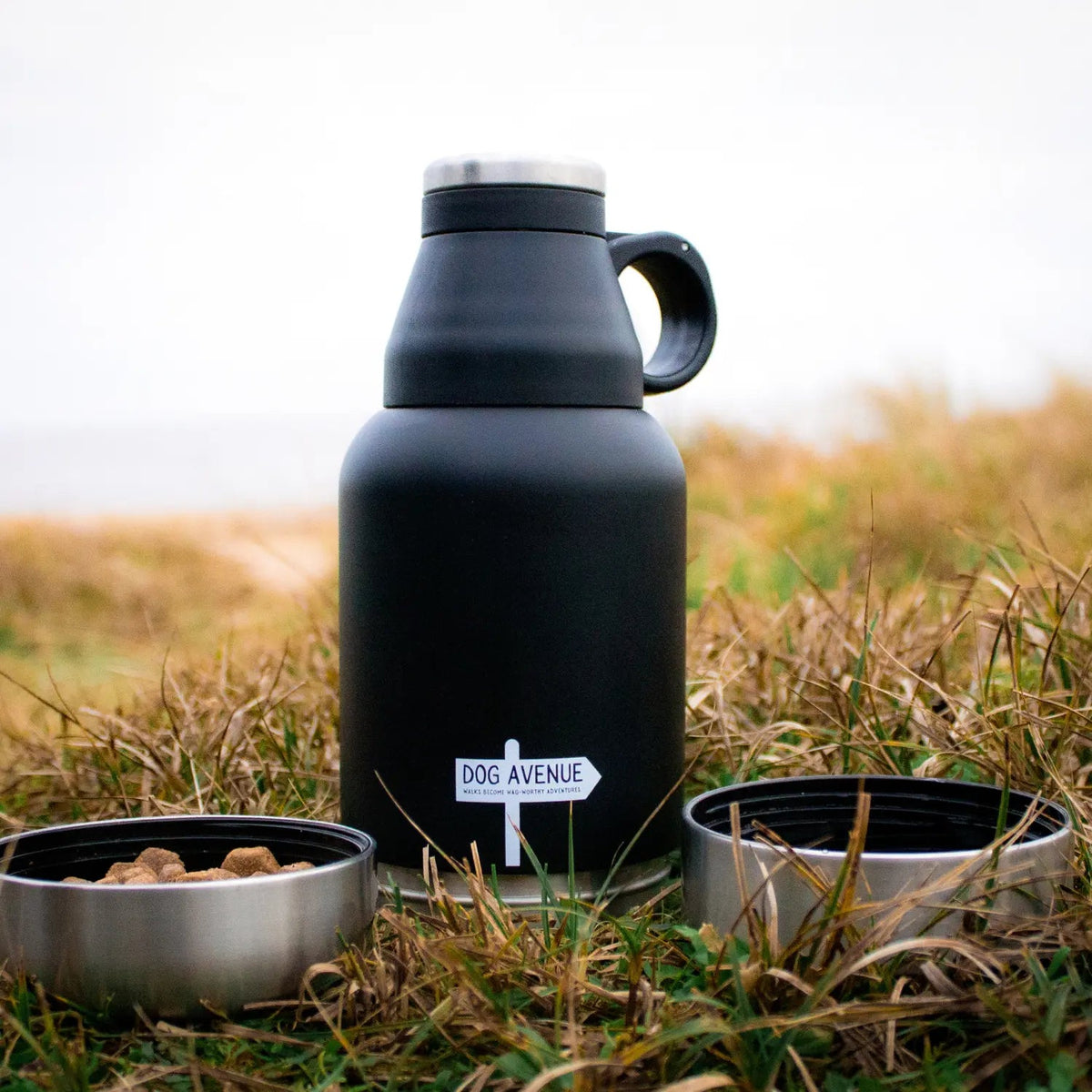
The Dog Avenue 3-in-1 Outdoor Dog Water Bottle holds 950ml, is double-wall vacuum insulated, and has detachable water and treat bowls built in. It also has a cup lid for your own drink, and it sits in a padded carrier with a shoulder strap, zip pocket and waste bag dispenser.
Food and treats
On a long day, your dog will use more energy than usual. Take a small meal or a few extra treats for rest stops, plus high-value treats for recall if you're passing livestock or wildlife. Pack a few of our Dog Walk Treats in the bottle's treat bowl.
Lead, harness and ID
- A fixed-length lead no longer than 2 metres, for open access land in spring and summer and around livestock.
- A comfortable harness for long days and scrambles.
- A collar and ID tag. By law, all dogs in public must wear a collar and tag with the owner's name and address, and all dogs aged eight weeks or over must be microchipped. Keep your microchip details up to date.
Poo bags
Take more than you need, and a way to carry full bags until you reach a bin.
A first aid kit and tick remover
Blue Cross recommends a dog first aid kit that includes non-adhesive absorbent dressings, bandages, sterile water or wound wash with cotton pads, sterile gauze, blunt-ended scissors and a thick towel. Add a tick remover and your vet's details.
Clothing and comfort
- A waterproof coat for short-coated dogs in cold or wet weather.
- A towel for the car.
- A light or hi-vis kit if you might finish near dusk.
For you
A map or downloaded route, a charged phone, waterproofs, and snacks. The detachable cup on our bottle means you can share a hot drink stop with your dog.
On the trail
- Take regular breaks, and let your dog set the pace on steep sections.
- Keep your dog close near cliff edges, roads and livestock.
- Check paws at stops for cuts, thorns or grit.
- Watch for signs your dog is flagging, such as lagging behind, lying down or limping, and turn back early if needed.
After the hike: check for ticks
Ticks are most common between spring and autumn in areas with lots of deer or sheep, especially woodland, grassland and heath, but they can be active all year. When you get home, run your hands over your dog, particularly around the head, neck, ears and feet, and feel for small bumps.
To remove a tick, use a tick removal tool and twist until it comes away. Never crush, squeeze, burn or smother a tick. Ticks can carry Lyme disease, so speak to your vet if your dog becomes lame, feverish or unwell after a walk in tick country.
Dog hiking checklist
- Water (more than you think) and a bowl
- Food and treats
- Lead (2m max), harness, collar and ID tag
- Poo bags
- Dog first aid kit and tick remover
- Coat and towel
- Light or hi-vis for late finishes
- Map, phone and your vet's number
Looking for more ideas? Read our guide to dog-friendly days out, or our tips on travelling with your dog.

Leave a comment
This site is protected by hCaptcha and the hCaptcha Privacy Policy and Terms of Service apply.